
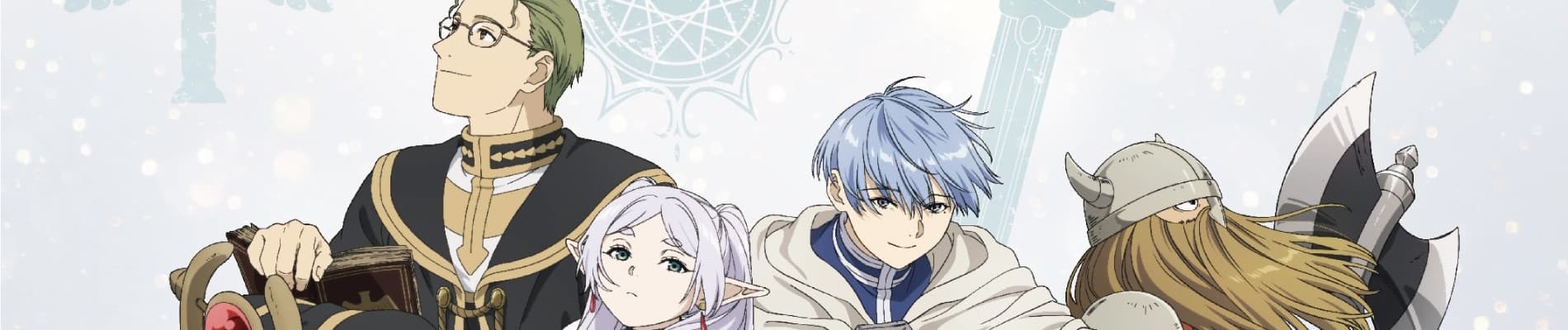
10 anime like Frieren: Beyond Journey's End
Frieren: Beyond Journey's End is the rarest kind of fantasy anime. It begins where the standard adventure ends — the demon king is dead, the four-person hero party has gone home, the world has been saved. Then it watches the elven mage Frieren outlive her human companions one by one over centuries, slowly realizing she never understood Himmel the Hero (or anyone) while they were alive. Madhouse's adaptation, directed by Keiichiro Saito with music by Evan Call, ran for 28 episodes from September 2023 through March 2024, and went on to win Best Drama Anime, Best Director (Saito), Best Background Art, and Best Supporting Character (Fern) at the 2025 Crunchyroll Anime Awards. Anime of the Year that year went to Solo Leveling — the literal opposite of what Frieren does.
That contrast is the whole point of this list. Frieren is the show people watch because they're tired of escalation. There are no level-ups, no power-creep, no boss tiers, no "but what if she fought X." The drama is whether Frieren will actually listen to Fern when she says something matters, or whether she'll let another decade slip past before she notices. The 10 picks below share that energy — slow pacing, character-first writing, and a fantasy world that exists to ask questions rather than be defeated. They're grouped by which specific Frieren trait they best mirror, not ranked best-to-worst.
Quick answer
The closest single match for Frieren is Mushishi — episodic, contemplative, and built around a long-lived protagonist who observes more than acts. If you want a tragic version of the immortal-protagonist idea, watch To Your Eternity. If you want the same post-quest worldbuilding without the elf, the 2024 remake of Spice and Wolf is the closest tonal companion. For the visual-art ceiling, Land of the Lustrous. Avoid anything tagged "isekai action" or "harem" — Frieren's mood doesn't translate to those.
Long-lived protagonists looking back
1. Mushishi
Ginko wanders an ambiguously pre-modern Japan, investigating "mushi" — primordial life-forms that exist between the seen and unseen world, affecting humans in ways nobody else can perceive. Each episode is a self-contained encounter: a village dealing with a strange illness, a mountain that swallows sound, a family living with a curse they don't fully understand. Ginko helps where he can. Often he can't. He moves on.
The overlap with Frieren is the observational, episodic distance. Both Ginko and Frieren are non-human-adjacent figures who walk through human lives at a different timescale, learning from brief encounters that the humans will forget in a generation. Neither show treats wisdom as something earned through victory — both treat it as something acquired through patience. The 26-episode original run (2005) and 22-episode continuation (Mushishi Zoku Shou, 2014) are best watched slowly. One episode a night is the pace.
MAL ~8.66, AniList listed as 26 episodes for the original. Streaming on Crunchyroll [VERIFY country availability]. If you only have time for one entry on this list, this is it.
2. To Your Eternity
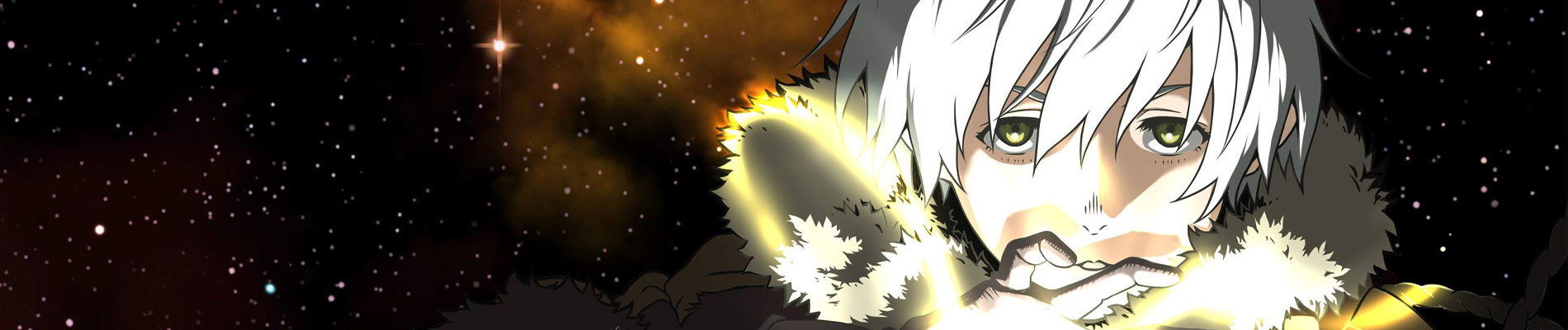
An immortal being lands on Earth as a featureless orb. It learns by absorbing the forms and memories of the dying things it meets — first a rock, then a wolf, then a boy named Fushi who teaches it what attachment means. Then the boy dies. Fushi takes his form and starts walking. The show is To Your Eternity's answer to the question Frieren is built around: what does immortality teach you about the people who don't have it?
The overlap with Frieren is the grief-of-outliving-everyone. Both shows treat immortality as a slow accumulation of losses rather than an action-power. The difference is To Your Eternity is far more openly tragic. Fushi loses everyone he loves repeatedly, and the show doesn't soften it. Frieren's grief is restrained; To Your Eternity's grief is the entire structure.
MAL ~8.51, 20 episodes for Season 1 (Spring 2021) plus Season 2 (Fall 2022). Streaming on Crunchyroll. The opening — Hikaru Utada's "PINK BLOOD" — became one of the most-streamed anime OPs of the year. Watch this if you're prepared to cry more openly than Frieren asks you to.
After the adventure ends
3. Maoyu: Archenemy & Hero

The Hero finally reaches the Demon Queen's chamber to end the war. The Demon Queen greets him with a proposal: stop fighting and help her solve the underlying economic crisis that's been driving the war for centuries. The remaining 11 episodes are about agricultural reform, trade routes, and political theory. The Hero learns to read. The Queen learns negotiation. Battles happen, but they're not the point.
The overlap with Frieren is the post-quest framing and the systemic worldbuilding. Both shows are about what comes after the heroic narrative ends — the slower, more difficult work of building something. Maoyu is more explicitly economic and political than Frieren; it's almost a fantasy textbook on medieval mercantilism. But the underlying argument is the same: the demon king is the easy problem. The hard problem is everything else.
MAL ~7.18, 12 episodes (Winter 2013), ARMS production. The animation is dated by 2026 standards. The script is what people remember. Streaming on Crunchyroll [VERIFY].
4. Spice and Wolf: Merchant Meets the Wise Wolf (2024)
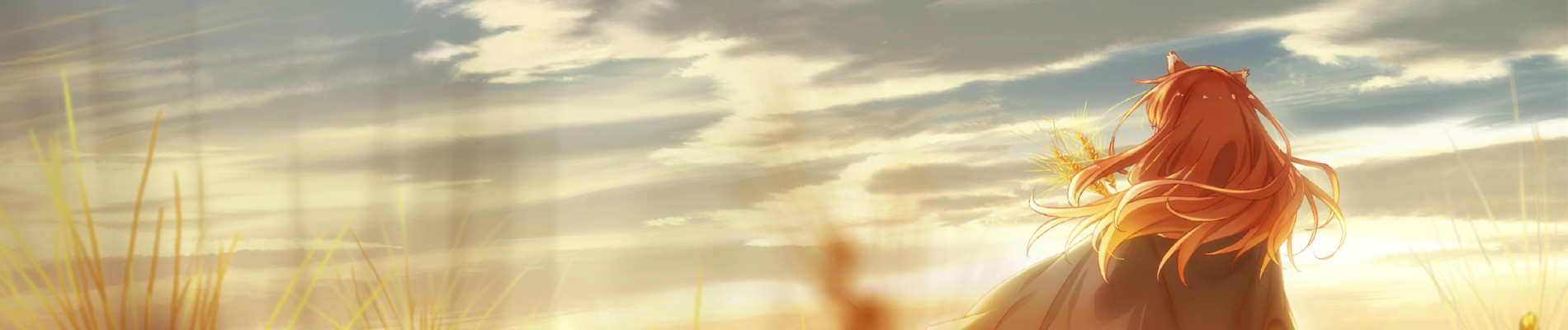
Kraft Lawrence is a traveling merchant in a vaguely-medieval-European fantasy world. He picks up Holo, a wolf-deity of the harvest who is several hundred years old and very tired of being worshipped. They travel together. They negotiate trades. They argue about exchange rates. They develop one of the most slow-burn romances in anime. The 2024 remake (Passione studio, 25 episodes) adapts the source material more faithfully than the 2008 version and lets the conversation breathe.
The overlap with Frieren is the long-lived female companion and the road-anime pacing. Both Holo and Frieren are non-human women whose perception of time creates emotional distance from their travel partner. Both shows are built around what gets said during the quiet hours — meals, riverside camps, town squares. The difference is Spice and Wolf leans much more on economics and dialogue while Frieren leans on memory and silence. If you liked the Frieren-and-Heiter chess scenes, you'll like the Lawrence-and-Holo currency-exchange scenes.
MAL ~7.93 (2024 remake), Aniplex production. Streaming on Crunchyroll worldwide [VERIFY]. The 2024 version is the recommended entry point — the 2008 anime has a smaller animation budget and skips key Holo character moments.
Quiet party-of-companions journeys
5. Ranking of Kings
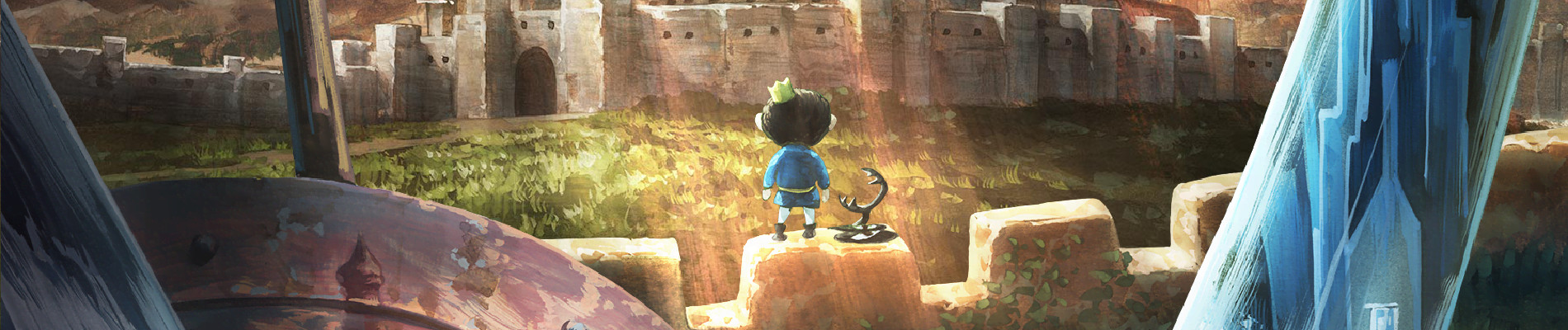
Prince Bojji is mute, deaf, physically tiny, and considered too weak to inherit the throne of his kingdom. He meets a shadow-creature named Kage and the two of them set off into the world together — Bojji to prove he's worth something, Kage to figure out what he actually wants. The show looks like a children's storybook. Its emotional content is closer to a Greek tragedy.
The overlap with Frieren is the small-party emotional growth. Both shows are about characters who learn to be vulnerable around their travel companions. Both treat strength as a moral question, not a power-scaling question. The difference is Ranking of Kings is more openly fairytale-adventure — kingdoms, sword fights, magical artifacts, the works. But the heart of the show is the same as Frieren: who shows up for whom, and what that costs.
MAL ~8.41, 23 episodes (Fall 2021), Wit Studio production. Streaming on Crunchyroll worldwide [VERIFY]. The character designs throw some viewers off in episode 1 — push through. The show earns the fairytale aesthetic.
6. The Ancient Magus' Bride

Chise Hatori is a fifteen-year-old orphan who's been sold at a magical auction. The buyer is Elias Ainsworth, an ancient horned magus who isn't quite human and doesn't quite know how to interact with one. He buys her not to use her but to teach her magic — and to be her partner. The relationship is unsettling in episode 1, deliberately so, and gradually becomes one of the most carefully-drawn portraits of mutual healing in fantasy anime.
The overlap with Frieren is the long-lived non-human protagonist gradually understanding emotional connection. Elias is centuries old, doesn't read human expressions, and has to be taught what care looks like — which is the inverse of Frieren's arc with Fern and Stark. The difference is Ancient Magus' Bride engages much more directly with folklore and Celtic mythology — fairies, dragons, ancient curses. Frieren's mythology is sparser and more functional.
MAL ~8.16, 24 episodes for Season 1 (Fall 2017-Spring 2018), Wit Studio. Season 2 (Fall 2023) was produced by Studio Kafka. Streaming on Crunchyroll and HIDIVE [VERIFY country availability]. The content warning is real: the Chise-Elias dynamic is built on consent issues the show explicitly works through. If that's a hard pass, skip this entry.
Episodic, contemplative fantasy
7. Wandering Witch: The Journey of Elaina
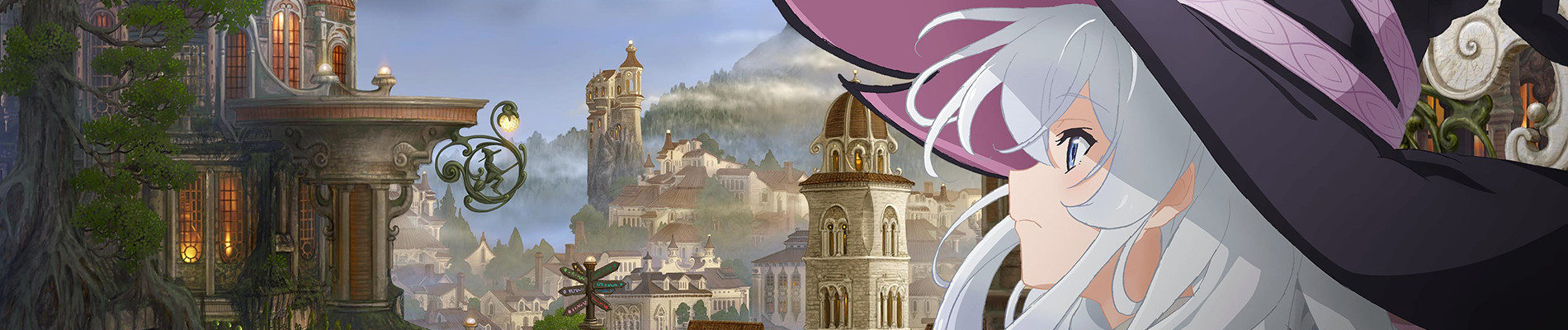
Elaina is a young witch traveling from country to country, observing each one's particular culture and moral flaws and then moving on. Some episodes are gentle and funny. Some are quite dark. Elaina herself is not the hero of every story — sometimes she's the witness, sometimes the bystander, sometimes the one who chooses not to intervene.
The overlap with Frieren is the travel-as-structure and the protagonist's detachment. Both Elaina and Frieren are powerful magic-users who walk through human stories without always being the protagonist of them. The difference — and it's significant — is Elaina is colder than Frieren. Wandering Witch deliberately presents a protagonist who often should help and doesn't. Some viewers find this a feature; others find it a flaw. Treat it as a different kind of contemplative fantasy than Frieren's warmer version.
MAL ~7.39, 12 episodes (Fall 2020), C2C production. Streaming on Funimation/Crunchyroll [VERIFY]. The light-novel source has more material — the anime adapted selected stories rather than the full arc.
8. Kino's Journey: The Beautiful World (2003)
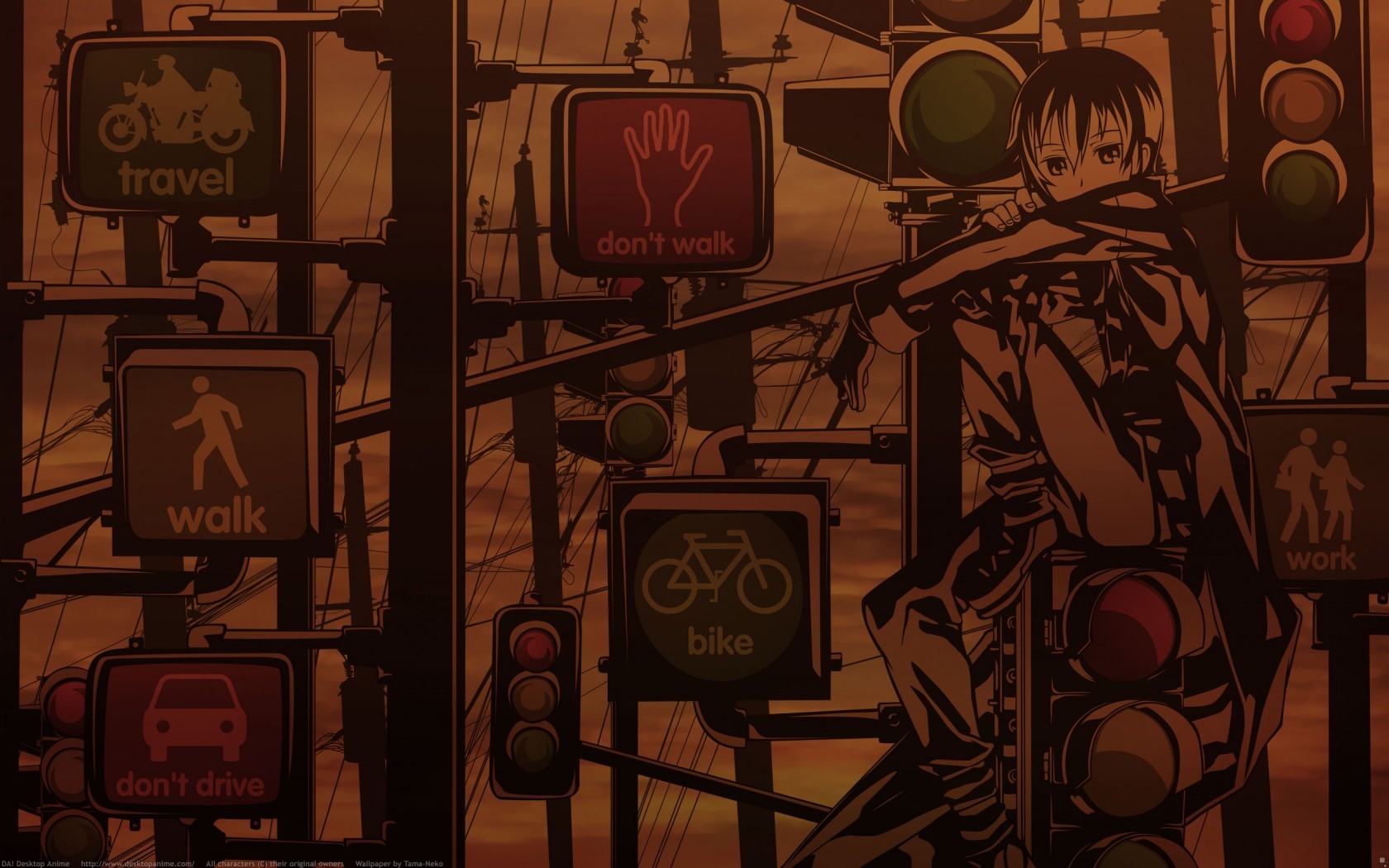
Kino, a traveler accompanied by a talking motorcycle named Hermes, visits one country per episode. They stay exactly three days. Then they leave. Each country has a single defining philosophical premise — "the country where everyone reads minds," "the country of adults," "the country that legalized murder" — and the episode is about how Kino observes its consequences and chooses what to do or not do.
The overlap with Frieren is the philosophical travel-vignette structure. Both shows use a wandering protagonist to ask questions about how societies handle memory, violence, ritual, and choice. The difference is Kino's Journey is far more allegorical — many episodes are essentially thought experiments rather than emotional encounters. Frieren is warmer; Kino's Journey is closer to fable. The 2003 adaptation by A.C.G.T. is the canonical version. (A 2017 reboot exists but is less consistently regarded.)
MAL ~8.30 (2003 version), 13 episodes plus OVAs. Streaming availability is rough — currently only on Funimation/Crunchyroll in selected regions [VERIFY]. The "Coliseum" two-parter (episodes 5-6) is the strongest single arc and the best gateway if you want to sample before committing.
Character-driven slow burn
9. Ascendance of a Bookworm
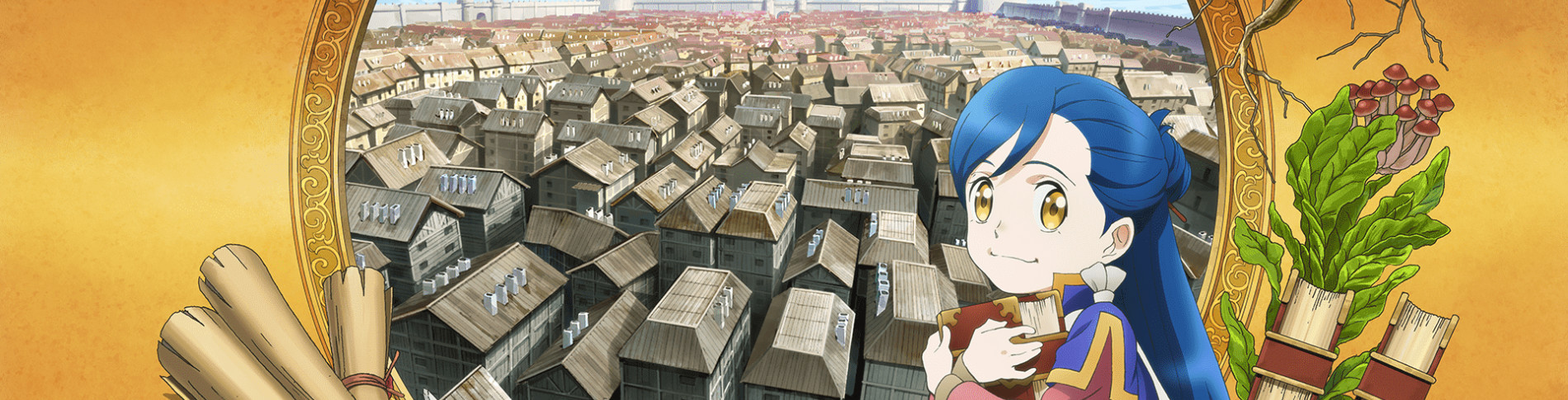
A modern-day book-obsessed librarian dies in a book-related accident and reincarnates as a frail five-year-old girl in a medieval fantasy world where books are luxury items only nobility can own. The next 14 episodes are about Myne (the new identity) inventing paper, learning bookbinding, and slowly working her way through a rigid social hierarchy to get access to literature. Action scenes happen. Mostly the show is about manufacturing.
The overlap with Frieren is the patient, accumulative pacing and the world-feels-lived-in detail. Both shows reward attention. Both treat character growth as a function of small daily choices over long timelines. The difference is Ascendance is more technically isekai — the protagonist literally arrives from modern Japan — and more focused on economic/social mobility than on grief or memory. But the underlying texture (every detail of the medieval world matters, every relationship is built over many hours) is recognizably the same.
MAL ~8.06, 14 episodes for Season 1 (Fall 2019), Ajia-do Animation Works. Three seasons plus a film aired through 2024. Streaming on Crunchyroll [VERIFY]. The audience for Bookworm is more specific than for Frieren — if you don't like detailed worldbuilding around medieval craft, skip it.
High-art, meditative fantasy
10. Land of the Lustrous (Houseki no Kuni)

In a far-future Earth where humanity is long extinct, twenty-eight crystalline beings — Gems — live on a single landmass, fighting off the Lunarians who arrive periodically to steal them and turn them into jewelry. The protagonist Phosphophyllite is the youngest, weakest Gem, assigned to write a natural history because they can't fight. Over the course of 12 episodes, Phos is repeatedly broken, repaired, and transformed — each transformation costing them memory and identity.
The overlap with Frieren is the long-lived, non-human protagonist whose identity shifts across centuries. The Gems live for millennia, and the show argues that being non-human doesn't exempt you from grief — it just means grief works differently. The difference is Land of the Lustrous is far stranger and more abstract than Frieren. The Gems are crystalline entities whose relationships don't map cleanly onto human ones. The animation (entirely 3D-CGI by Studio Orange) is the cleanest case for "CGI anime can be high art" in the medium.
MAL ~8.32, 12 episodes (Fall 2017), Studio Orange production. Streaming on HIDIVE [VERIFY country availability]. The manga is ongoing and goes substantially beyond the anime's stopping point — and gets stranger.
Which Frieren trait do you want more of?
| Pick | Best shared trait with Frieren | Pacing | Caveat |
|---|---|---|---|
| Mushishi | contemplative episodic encounters | very slow | less party chemistry |
| To Your Eternity | immortality, grief, memory | medium | far more openly tragic |
| Maoyu | post-war/post-quest fantasy | medium | more political/economic |
| Spice and Wolf (2024) | long-lived companion, travel dialogue | slow | more romance and economics |
| Ranking of Kings | emotional party growth | medium | more fairytale-adventure |
| Ancient Magus' Bride | healing, folklore, belonging | slow | difficult relationship setup |
| Wandering Witch | episodic magical travel | medium | colder protagonist |
| Kino's Journey | philosophical travel vignettes | slow | more allegorical |
| Ascendance of a Bookworm | slow world-building and character growth | slow | isekai setup |
| Land of the Lustrous | immortal/non-human identity | medium | more abstract and unresolved |
What to watch first after Frieren
For most viewers, the best entry point is Mushishi. It's the closest tonal match — same observational pacing, same comfort with letting an episode end without resolution. Try one or two episodes before deciding.
If that doesn't land:
- For travel and banter: Spice and Wolf (2024). The Lawrence-Holo dynamic is the closest replacement for the Frieren-Fern walking-and-talking scenes.
- For grief processing: To Your Eternity. Be prepared.
- For visual ambition: Land of the Lustrous. Twelve episodes, no fillers.
- For post-quest political fantasy: Maoyu. The animation is dated; the script isn't.
- For more party-style adventure: Ranking of Kings. The most accessible pick if Frieren felt slow.
What to avoid if you came to Frieren specifically for the reflective pacing: standard isekai action shows, harem romances, and anything where the marketing leads with "overpowered protagonist." Those are the opposite genre. Solo Leveling is what Frieren is pacing itself against — different category entirely.
FAQ
Q: What anime is most similar to Frieren: Beyond Journey's End? A: Mushishi is the closest tonal match for the quiet, episodic, contemplative storytelling. Spice and Wolf (2024) is the closest for the long-lived-companion-and-travel structure. Ancient Magus' Bride is the closest for the slow-character-healing arc.
Q: Is there another anime about an immortal protagonist like Frieren? A: Yes — To Your Eternity and Land of the Lustrous both follow long-lived, non-human protagonists who accumulate grief over centuries. Both are darker than Frieren. Mushishi's Ginko isn't literally immortal but functions narratively as a long-lived observer.
Q: What should I watch after Frieren if I liked the slow pacing? A: Mushishi, Ascendance of a Bookworm, and Ancient Magus' Bride are the three safest slow-burn picks. All three reward patience and accumulate emotional weight gradually rather than through arc-finale spikes.
Q: Are there anime like Frieren that focus on travel instead of action? A: Kino's Journey, Wandering Witch, Mushishi, and Spice and Wolf all use travel as the main structure. Kino's Journey is the most philosophical; Spice and Wolf is the most dialogue-heavy; Mushishi is the most episodic.
Q: Is Frieren more like slice-of-life or fantasy adventure? A: Both. Frieren is structurally fantasy-adventure (party, quest, travel, magic) but paced like slice-of-life (everyday moments, character interiority, no escalation). That hybrid is what most recommendation lists miss — most "anime like Frieren" picks either skew too slice-of-life or too action-fantasy.
If you've worked through the picks above, MyAnimePulse tracks ongoing seasons and ranks similar titles automatically — open the Frieren page for live recommendations, or the fantasy hub for the 2026 ranking. The Frieren Season 2 (●● no Mahou arc) is scheduled for Winter 2026 [VERIFY exact air date] — the wait for that is real, but the back-catalogs above are how you survive it.