
10 anime like Solo Leveling that scratch the same itch
Solo Leveling did something rare for an action anime in 2024. It opened to a Crunchyroll global premiere, hit number-one in eight countries, and stayed in the conversation long enough that Season 2 — Arise from the Shadow — became the highest-anticipated continuation of 2025. A-1 Pictures' production was so labor-intensive that producer Atsushi Kaneko told GamesRadar one twenty-four-minute episode could take up to twelve months to make. You can see it on screen. Every dungeon raid is animated like a small film.
The problem is the follow-up. Search "anime like Solo Leveling" and you'll get the same fifteen titles in every list, ranked by vibes, with no real grouping. So this list is different. Solo Leveling combines four distinct appeals — overpowered protagonist, game-like system mechanics, dungeon raids, and high-budget action spectacle — and most "similar" shows only hit one or two of them. Pick the recommendation that matches what you actually liked, not what someone else liked.
Quick answer
The closest matches to Solo Leveling depend on what you liked most. For dungeon-and-system mechanics, watch Shangri-La Frontier or Is It Wrong to Try to Pick Up Girls in a Dungeon?. For overpowered protagonists in dark fantasy worlds, go to Overlord or The Eminence in Shadow. For the action spectacle and sakuga, Jujutsu Kaisen and Kaiju No. 8 are the closest current-era equivalents. Skip anything tagged "isekai romance" or "slow burn" — Solo Leveling's pacing is the third thing it gets right, and most recommendations ignore that.
Overpowered MC progression
1. The Eminence in Shadow

Cid Kagenou wants to be the secret mastermind behind a fictional shadow organization. He invents an elaborate lore about ancient cults and an evil ruler purely for his own amusement, recruits girls he saves for emotional support, and starts cosplaying as a hero — except every single fake thing he made up turns out to be real, and now he's actually running the most powerful organization on the continent without knowing it.
The similarity to Solo Leveling is the hidden-strength power fantasy. Both Sung Jin-Woo and Cid Kagenou conceal their true power, both move from underestimated to dominant, and both build a private army of subordinates who treat them with religious devotion. The difference is tone. Eminence in Shadow knows it's funny. It's a parody of the chuunibyou trope that happens to also work as a competent dark-fantasy power-fantasy. Studio Nexus animates Cid's hidden combat ability with serious weight, which makes the contrast between his ironic narration and his actual fights consistently entertaining.
MAL ~7.71. Two seasons aired, plus the Master of Garden spin-offs. Streaming on HIDIVE in most regions [VERIFY — availability changes by country]. Skip Cid's chuunibyou monologues if comedy isn't your thing, but the action sequences are genuinely on the level of mid-tier Solo Leveling. Season 2 (Fall 2023) tightens the pacing significantly.
2. Overlord
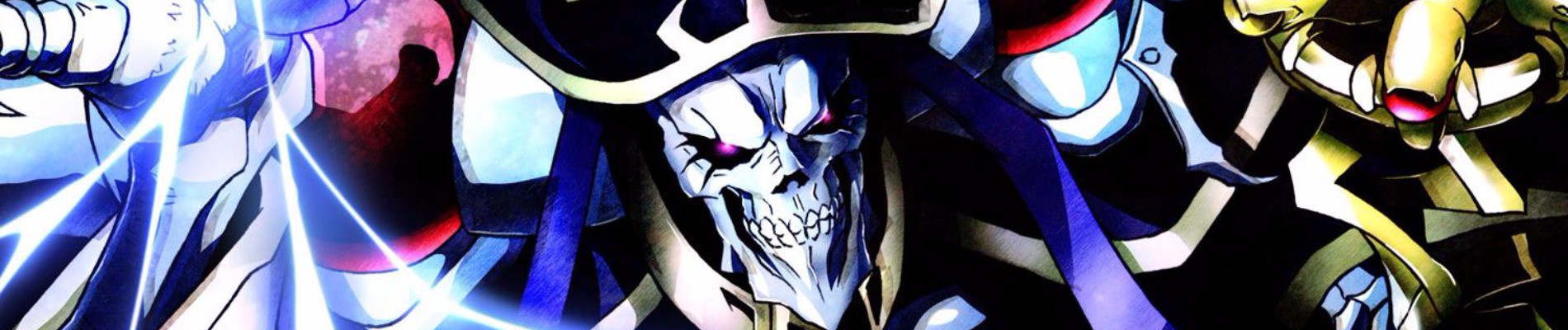
Ainz Ooal Gown is the last player logged into an MMORPG when the server shuts down. Instead of disconnecting, he's transported into the game world as his max-level skeleton character, surrounded by NPCs he created who now consider him a god. He decides to take over the world — not because he's evil, but because there's no other goal that makes sense for a level-100 overlord in a world where everyone else caps at 30.
The overlap with Solo Leveling is the god-mode protagonist surrounded by loyal subordinates. Ainz's Tomb of Nazarick floor guardians are functionally identical to Jin-Woo's shadow soldiers: powerful, devoted, and a flex on every opponent that walks in. The difference is moral framing. Jin-Woo stays the hero through five arcs. Ainz is doing genocide by season three and the show frames it as completely justified power management, which makes Overlord the most morally grey pick on this list.
MAL ~7.93, four seasons aired plus the Holy Kingdom Arc film (2024). Crunchyroll has the full run [VERIFY country availability]. The pacing is slower than Solo Leveling — Madhouse takes time to set up political machinations between fights — but when the action lands, it lands hard. Season 4's catastrophic-empire arc is one of the most satisfying power-fantasy sequences in modern anime.
3. That Time I Got Reincarnated as a Slime
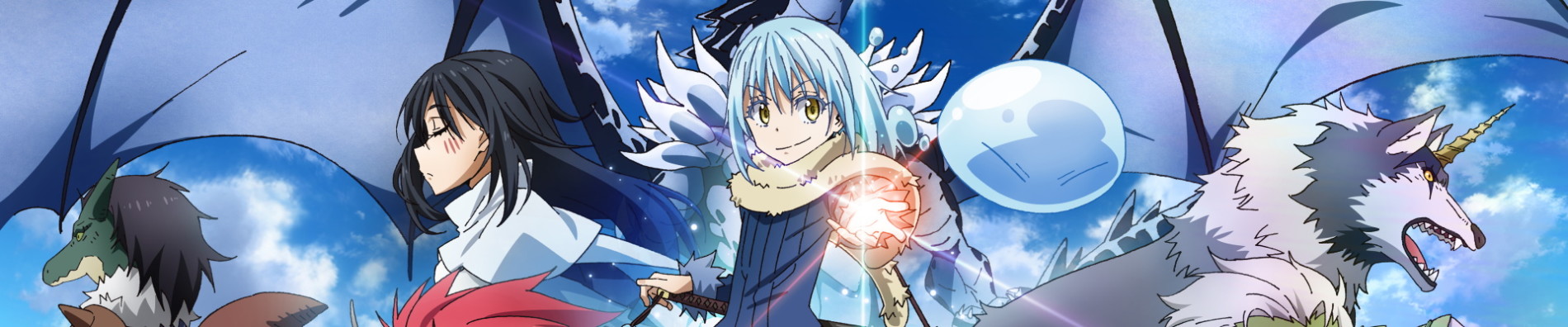
A corporate salaryman is stabbed in modern Tokyo, reincarnated as a slime in a fantasy world, and immediately discovers his slime form has the Predator skill — he can absorb anything he eats and gain its properties. Within three episodes he's eaten a storm dragon and is bilingual in five magical languages. By episode twelve he's founding a nation.
The similarity to Solo Leveling is the upward progression curve. Both shows are mostly about watching the protagonist get steadily stronger and accumulate resources, allies, and territory. The difference is intent. Solo Leveling is grim. Slime is a relentlessly upbeat nation-building fantasy where Rimuru befriends or recruits every monster he meets and the conflicts are mostly diplomatic. Same dopamine, different temperature.
MAL ~8.06, three seasons aired plus the Scarlet Bond film and Coleus's Dream OVA. 8bit's production has stayed consistent across all three cours, which is rare. Available on Crunchyroll. Try this if you liked Solo Leveling's power progression but want something less violent and more colorful — or if you want a long-running series with 70+ episodes to binge.
Dungeon, system, and game-like mechanics
4. Is It Wrong to Try to Pick Up Girls in a Dungeon?
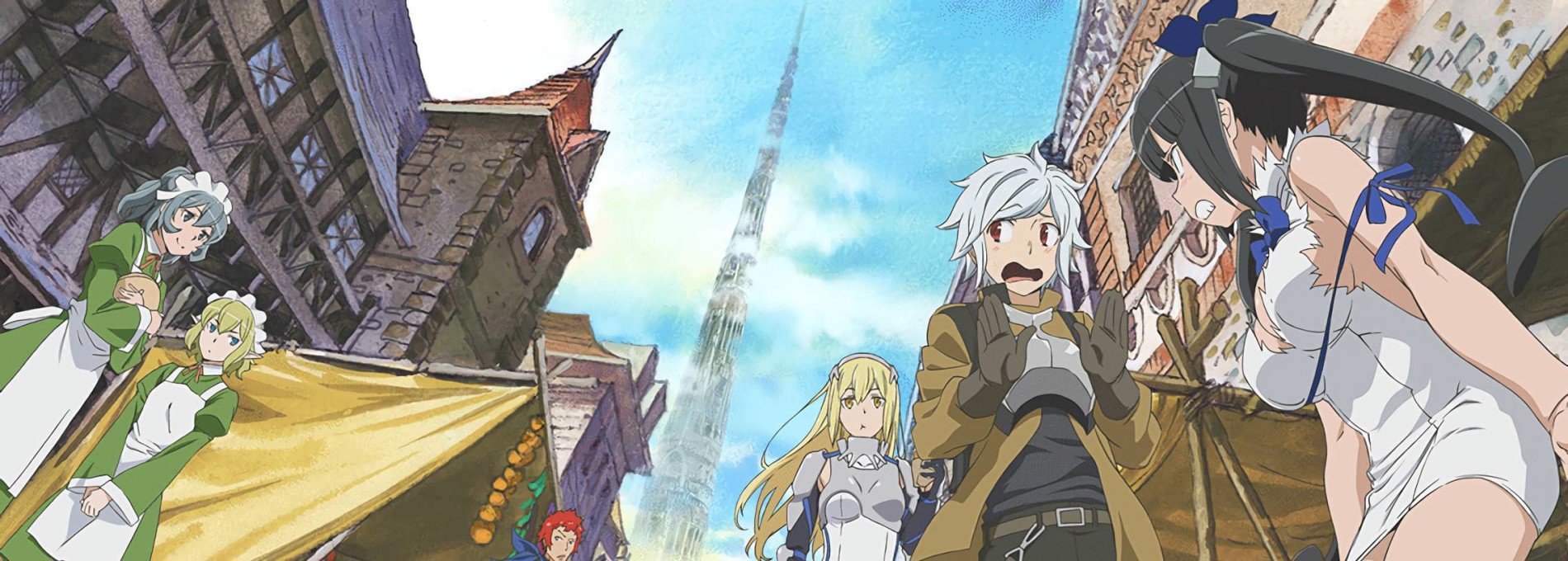
The city of Orario is built on top of a dungeon. Adventurers form familias under patron deities, descend through floors, fight monsters, level up, and try not to die. Bell Cranel is the weakest adventurer alive when the show starts, and the entire premise is watching him claw upward through a rigid power hierarchy that very explicitly does not want him to win.
The similarity to Solo Leveling is the literal dungeon-floor-and-rank structure. Both shows treat power as a measurable, visible quantity with adventurer ranks, skill names, and level-up sequences. Both protagonists start at the bottom of an explicit hierarchy and climb it. The difference is that DanMachi is also a slice-of-life harem comedy between fights, while Solo Leveling is a sustained grind. If you only liked the dungeon scenes in Solo Leveling and tolerated everything else, DanMachi might frustrate you. If you wanted more downtime with party members, it's perfect.
MAL ~7.30, five seasons aired plus the Sword Oratoria spin-off and Arrow of the Orion film. J.C. Staff has produced the whole run. Streaming on HIDIVE [VERIFY country availability]. Worth knowing: the dungeon mechanics tighten significantly from Season 2 onward — early episodes lean harder on the harem comedy, which puts off viewers who came for the action.
5. Sword Art Online
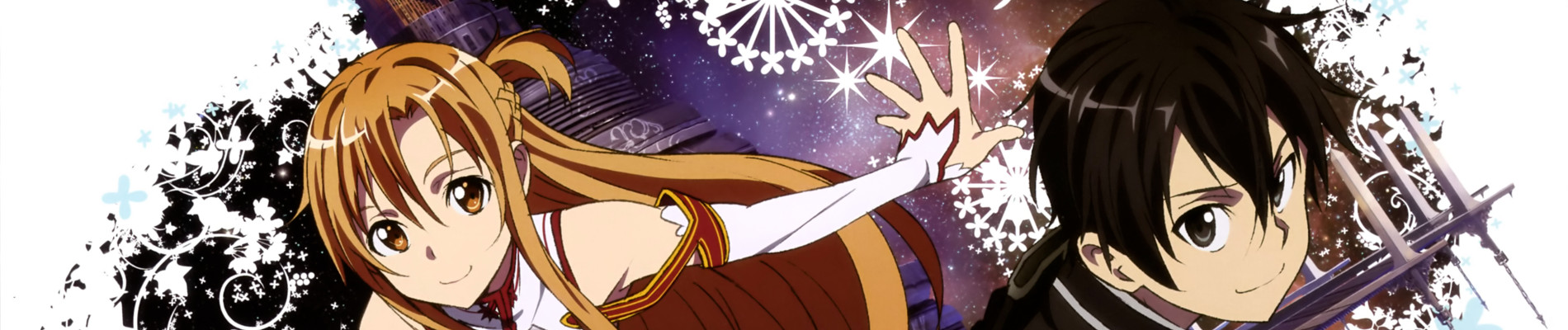
The OG VRMMORPG-trapped-in-the-game show. Ten thousand players log into a full-immersion MMO, get locked in, and discover that dying in the game means dying in real life. Kirito is one of the few beta testers, which gives him a head start on the level grind and a target on his back. Cue four arcs of game-world stakes, raid mechanics, and slowly accumulating skills.
The similarity to Solo Leveling is the video-game-as-reality framing. Both shows use floor-by-floor structure, level systems, named skills, raid bosses, and party mechanics as central narrative devices. The difference is Solo Leveling respects pacing and SAO doesn't — the show notoriously skips entire arcs of game progression, cuts directly to montages, and assumes you'll fill in the climb. Kirito also starts strong, which removes the underdog appeal. What it nails is the visual language of game UIs in animation, which most other titles on this list don't even attempt.
MAL ~7.20 for the original, four seasons total plus three films. A-1 Pictures animated the original (which is interesting since they also animated Solo Leveling). Crunchyroll and Netflix both carry it [VERIFY]. The fanbase debate around this show is exhausting. Just treat the first arc as a self-contained 14-episode prestige piece and skip the rest if you don't connect with Kirito.
6. Shangri-La Frontier
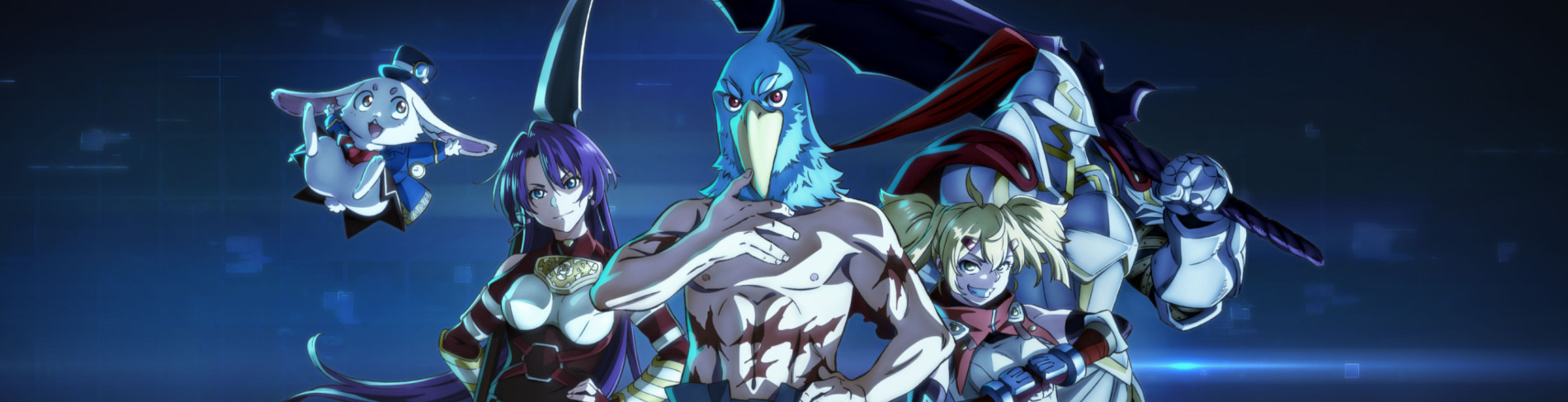
Sunraku is obsessed with finding the worst possible games — broken, unfinished, poorly-balanced "kusoge" — and grinding them to completion. When he tries Shangri-La Frontier, an extraordinarily polished VRMMO, he applies every dirty trick he's learned from years of bad games and becomes a top player by exploiting mechanics nobody else thought to use.
The similarity to Solo Leveling is the player-versus-game-world skill ceiling. Both protagonists treat their world as a puzzle to be solved through patient mechanical mastery. Sunraku's specialty is reading boss patterns and exploiting hitboxes — he's basically a speedrunner who happens to be in the game. The fights are extremely long, extremely tactical, and structured like raid encounters with phase transitions. C2C's animation budget is noticeably less than A-1's, but the choreography and the way the show explains game systems is some of the best in the genre.
MAL ~7.62, two cours aired (Fall 2023 and Fall 2024). A third cour was confirmed for 2026 production. Crunchyroll has the run. This is the closest active mechanical match to Solo Leveling in the current anime landscape — same boss-design philosophy, same focus on grinding, same MMO-as-reality conceit.
Action-first spectacle and sakuga
7. Jujutsu Kaisen
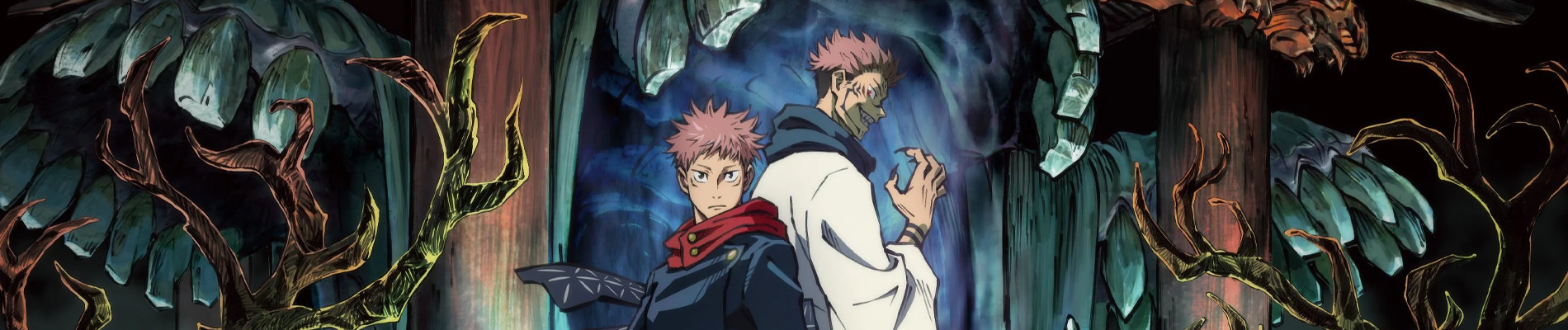
A high schooler swallows a cursed object to save his friends and ends up sharing his body with the King of Curses, a thousand-year-old apocalyptic demon with twenty fingers' worth of power. Now he attends a magic school for exorcists and tries not to let his roommate take over and end the world. Meanwhile his teachers are blackballed, his classmates are extremely powerful in extremely specific ways, and a millennium-old conspiracy is gathering speed.
The similarity to Solo Leveling is the cursed-energy combat as raid system. Domain Expansions function exactly like Solo Leveling's arena-effect skills: high-cost, high-risk abilities that warp the rules of the battlefield. Both shows treat power as a hierarchy with named techniques, grades, and visible rankings. The difference is JJK has stronger character writing and worse pacing. Where Sung Jin-Woo's arc is mostly internal, Yuji's story keeps adding new factions and stakes faster than the show can resolve them. MAPPA's sakuga during the Shibuya Incident (Season 2) is the high-water mark for modern shonen action animation — the Itadori vs. Choso fight alone is worth the watch.
MAL ~8.55, two seasons plus the Jujutsu Kaisen 0 film. Season 3 (Culling Game arc) is in production for Winter 2026 with MAPPA confirmed [VERIFY release window]. Crunchyroll has the back catalog. Be warned: JJK's ending is divisive, and Season 2's production schedule was reportedly punishing for MAPPA animators.
8. Demon Slayer: Kimetsu no Yaiba
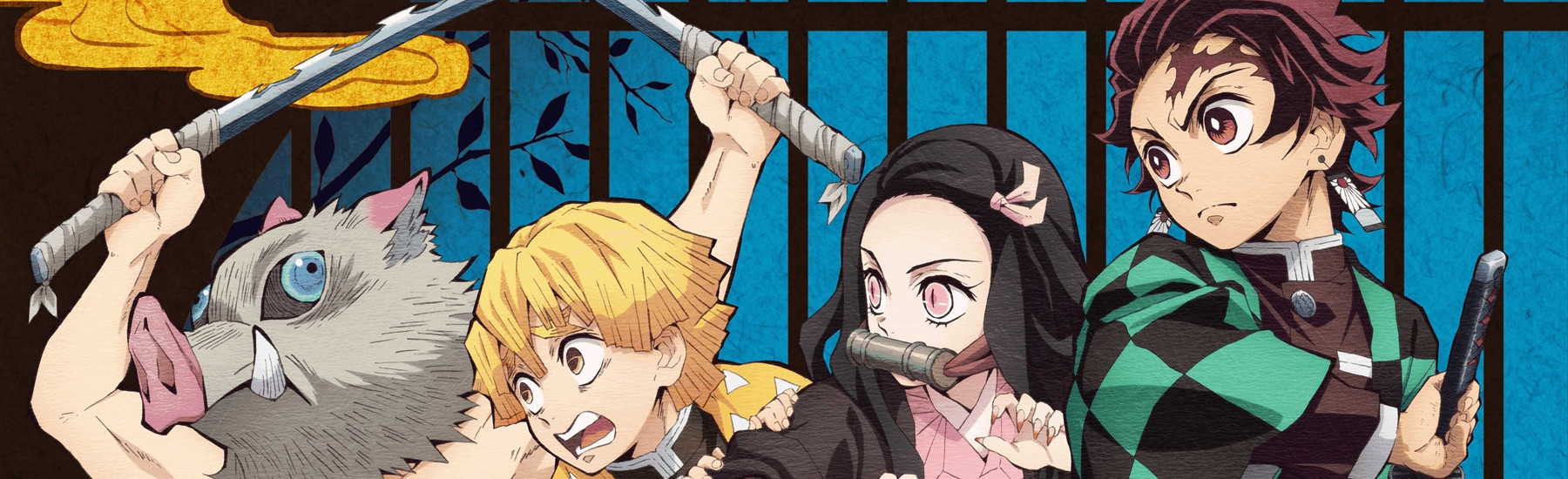
Tanjiro's family is slaughtered by a demon and his sister Nezuko is turned into one. To find a cure, he joins the Demon Slayer Corps — a centuries-old secret organization with ranked Pillars, named breathing techniques, and a strict hierarchy. The premise is small. The execution is enormous.
The similarity to Solo Leveling is the named-rank power structure plus the obsessive animation budget. Both shows treat their hierarchies as load-bearing — Demon Slayer's Hashira are the structural equivalent of Solo Leveling's S-rank hunters, and both shows spend serious screen time on what each rank can do. The difference is sakuga density. ufotable's Demon Slayer is the most expensive-looking TV anime ever produced, with effects compositing that broke records on the Mugen Train theatrical release ($507M global). Where Solo Leveling spreads its budget across full episodes, Demon Slayer concentrates it into devastating four-minute fight sequences.
MAL ~8.51, five seasons (counting the Mugen Train TV cut) plus three theatrical compilation/finale films, with the Infinity Castle arc film trilogy beginning Summer 2026. Crunchyroll, Netflix, Hulu, and Funimation carry various pieces [VERIFY territory]. If you only watched Solo Leveling for the fights, this is the obvious next pick — but expect a slower setup. Tanjiro's character arc takes longer to ramp than Jin-Woo's.
9. Kaiju No. 8
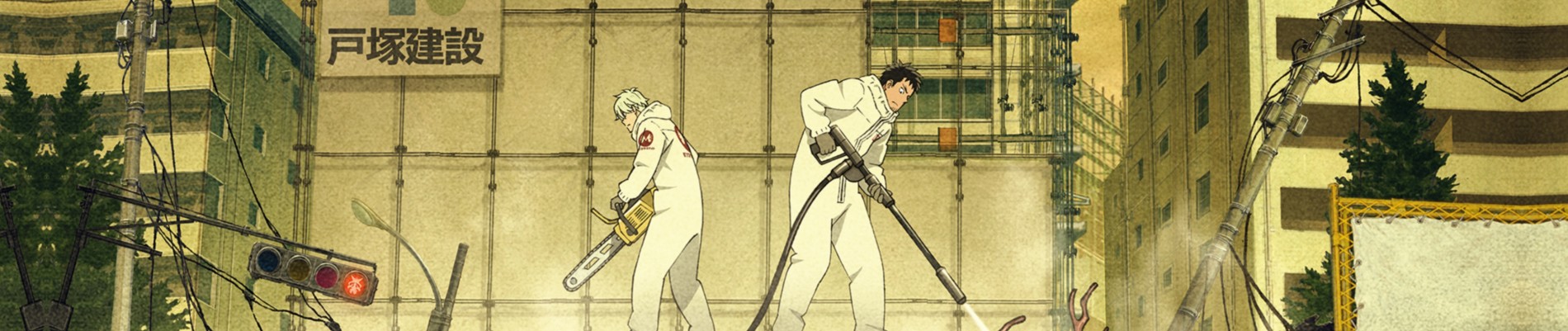
Kafka Hibino is a thirty-two-year-old kaiju cleanup worker who's failed the Defense Force entrance exam multiple times. Then a parasitic small kaiju enters his body and he gains the ability to transform into a humanoid Kaiju No. 8, the most powerful kaiju the Defense Force has ever encountered. He still has to take the entrance exam. Awkwardly.
The similarity to Solo Leveling is the late-bloomer power awakening and the organizational hierarchy. Both protagonists are written off as weak, then suddenly outclass their entire profession. Both shows have a rigid ranked structure (Defense Force divisions and combat power scores) and both spend significant time on the bureaucratic friction of being secretly more powerful than your superiors. The action animation is closer to Solo Leveling's style than anything else on this list — Production I.G. went all-in on the explosive battle sequences, and the show's first opening (YUNGBLUD's "Abyss") became one of the most-streamed anime OPs of 2024.
MAL ~7.71, one season aired (Spring 2024), Season 2 confirmed for 2026. Crunchyroll worldwide [VERIFY]. The manga is excellent and continues well beyond Season 1's ending — worth picking up the English Viz release once you finish.
10. Bleach: Thousand-Year Blood War
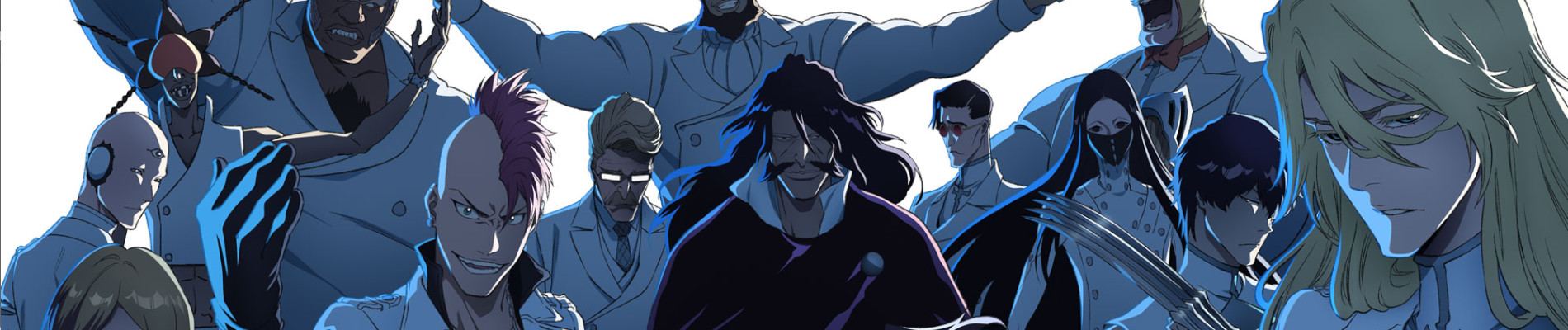
Ten years after the original Bleach anime ended on the most disappointing filler arc in shonen history, Studio Pierrot returned with a fully-animated adaptation of the manga's final arc — a Quincy invasion of the Soul Society that escalates power scaling to absurd heights. New Bankai forms, new dimensions, named techniques on top of named techniques. It is shonen power-creep in its purest form.
The similarity to Solo Leveling is the sustained vertical power escalation. Solo Leveling's second half is about Jin-Woo absorbing the shadows of every dead enemy he's ever encountered — a constant rolling power-up. TYBW is exactly that, but with twenty established characters all unlocking new forms simultaneously. The fight choreography is some of the best in the franchise's history (Pierrot's reinvented compositing makes 2012-era Bleach look like a different show), and the soundtrack — newly composed by Shiro Sagisu — uses orchestra and synth in a way that pairs surprisingly well with the Solo Leveling score.
MAL ~8.86 (the highest score on this list), three cours aired with the final cour scheduled for late 2026 [VERIFY exact window]. Hulu and Disney+ carry it in most territories — this is one of the rare cases where Crunchyroll does NOT have the simulcast [VERIFY country availability]. If you've never watched Bleach, you can technically start TYBW cold, but expect to be lost for the first three episodes while character relationships re-establish.
So which one is closest to Solo Leveling overall?
Different parts of Solo Leveling live in different shows, and forcing a single ranking would be dishonest. Here's the decision matrix:
- If you mostly want the dungeon-and-system mechanics: Shangri-La Frontier is the closest active match. Same boss-design philosophy, same skill-tree progression. DanMachi is the runner-up for the rank-and-floor structure if you don't mind harem-comedy interludes.
- If you mostly want the overpowered-protagonist fantasy: Overlord is the heaviest version, The Eminence in Shadow is the funniest, and Slime is the warmest. Pick by tone.
- If you mostly want the sakuga and the visual spectacle: Demon Slayer for animation density, Jujutsu Kaisen for character-driven fight choreography, Kaiju No. 8 for the closest tonal match to Solo Leveling's sleek action style.
- If you mostly want the late-bloomer underdog arc: Kaiju No. 8. The "thirty-two-year-old failure suddenly outclasses everyone" framing is the closest emotional beat to Jin-Woo's hospital-bed power awakening.
- If you want one show that hits multiple notes at once: Bleach: Thousand-Year Blood War. It's the most expensive-feeling continuation of a franchise on TV right now, the power scaling is the most aggressive, and the soundtrack/visual direction is in the same family as Solo Leveling's mood.
What to avoid if you only want Solo Leveling-style pacing
A common mistake in "anime like X" lists is including shows that are thematically similar but pace completely differently. Solo Leveling's actual genius is that the fights are short, the recovery is quick, and the next fight is already waiting in the wings. That economy of plot is rare.
Three pitfalls to skip if pacing is what you came for:
- Slow-burn fantasy isekai. Re:ZERO, Mushoku Tensei, Frieren — all genuinely great shows, none of them pace like Solo Leveling. Frieren in particular is the opposite genre: a meditative reflection on time and memory.
- Long-runners with filler. Classic Bleach and most of Naruto's middle arcs were built around weekly-publication structures that no longer apply to Solo Leveling's tight 12-episode cours. Even the manga readers will agree.
- Romance-isekai or harem-isekai with action wallpaper. Shows like In Another World With My Smartphone technically have leveling and dungeons but use them as comedy props rather than narrative structure. Save those for a different mood.
Watch order and episode counts (quick reference)
| Title | First aired | Episodes (S1) | Studio | Streaming (US) [VERIFY] |
|---|---|---|---|---|
| The Eminence in Shadow | Fall 2022 | 20 | Nexus | HIDIVE |
| Overlord | Summer 2015 | 13 | Madhouse / Pine Jam (S4) | Crunchyroll |
| That Time I Got Reincarnated as a Slime | Fall 2018 | 24 | 8bit | Crunchyroll |
| DanMachi | Spring 2015 | 13 | J.C. Staff | HIDIVE |
| Sword Art Online | Summer 2012 | 25 | A-1 Pictures | Crunchyroll, Netflix |
| Shangri-La Frontier | Fall 2023 | 25 (S1) | C2C | Crunchyroll |
| Jujutsu Kaisen | Fall 2020 | 24 | MAPPA | Crunchyroll |
| Demon Slayer | Spring 2019 | 26 | ufotable | Crunchyroll, Netflix |
| Kaiju No. 8 | Spring 2024 | 12 | Production I.G. | Crunchyroll |
| Bleach: TYBW | Fall 2022 | 13 (cour 1) | Pierrot | Hulu, Disney+ |
[VERIFY all streaming claims by country — anime availability rotates and licenses change. Check the platform page for your region before subscribing.]
FAQ
Q: What anime is most similar to Solo Leveling? A: It depends on which part of Solo Leveling you connected with. For game-mechanics, Shangri-La Frontier. For overpowered power fantasy, Overlord. For action animation quality, Jujutsu Kaisen or Demon Slayer. For the late-bloomer arc, Kaiju No. 8.
Q: Is Solo Leveling an isekai? A: Not in the traditional sense. Sung Jin-Woo doesn't get transported to another world — he stays in modern Korea and the dungeons open into our reality. It's closer to "system fantasy" or "modern dungeon fantasy" than classical isekai.
Q: What anime has dungeons like Solo Leveling? A: Is It Wrong to Try to Pick Up Girls in a Dungeon? (DanMachi) is the most literal match — adventurer ranks, descending floors, monster encounters by level. Shangri-La Frontier is the closer match for boss-design philosophy. Sword Art Online is the closest for game-UI presentation.
Q: What should I watch after Solo Leveling Season 2? A: If you're caught up on Arise from the Shadow and the next season hasn't aired, Shangri-La Frontier and Kaiju No. 8 are the closest tonally. Both have ongoing seasons in 2026, which means you can stay on the seasonal rotation without committing to long back-catalogs.
Q: Are there anime with a leveling system like Solo Leveling? A: Yes — Sword Art Online, Shangri-La Frontier, DanMachi, Overlord, and Slime all feature explicit numerical or rank-based progression as a narrative device. None present it as cleanly as Solo Leveling does, but they share the underlying "see the protagonist's stats go up" appeal.
If you've already burned through the picks above and want to go deeper, MyAnimePulse tracks ongoing seasons and ranks similar titles automatically — open the Solo Leveling page for the live recommendation list, or the action-anime hub for the full 2026 ranking. Watch what you'll actually enjoy, not what someone else told you to.