
The best anime soundtracks that defined their series
Here is the test. Close your eyes. Play a track. If the scene reconstructs itself in your head, if "Tank!" puts you in the cockpit of the Bebop, if "Sadness and Sorrow" sits you on that lonely swing, if "Hanezeve Caradhina" pulls you to the edge of the Abyss, then the soundtrack did something most music never does. It became inseparable from the thing it scored.
Most anime music is fine. Competent. Forgettable the moment the episode ends. The soundtracks on this list are different. They did not accompany their series. They defined them. Not ranked, because comparing big-band jazz to invented-language choral work is a fool's errand. Just the ones that matter most.
Cowboy Bebop: Yoko Kanno & The Seatbelts
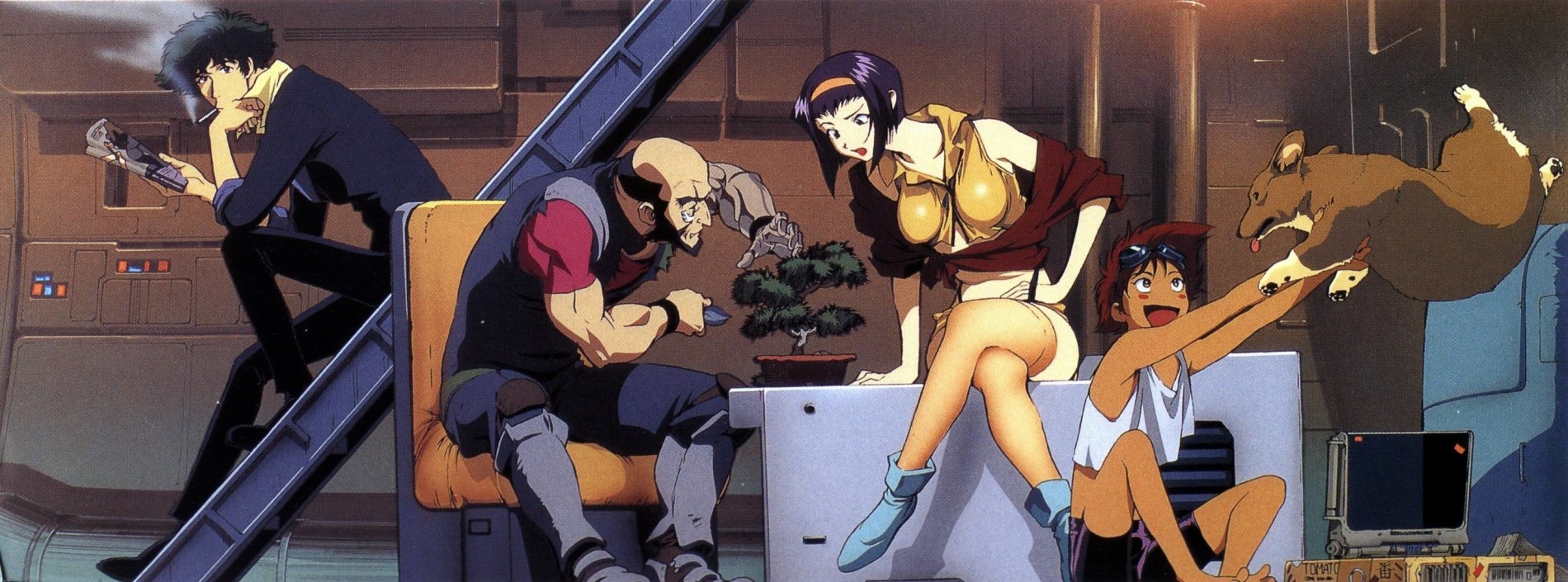
Yoko Kanno received the offer to compose for this show before it even had a title. She formed The Seatbelts, a band assembled specifically for the project, and got to work. By the time she finished the music, only about six or seven episodes had been written. That is an extraordinary reversal of how anime production normally works. The music was not written to fit scenes. Scenes were shaped around the music.
Director Shinichiro Watanabe described the creative process as a "game of catch." Music inspired scenes, scenes inspired music, back and forth until neither could exist without the other. Kanno's live-recording sessions gave the soundtrack a spontaneity that is vanishingly rare in television anime. You can hear musicians reacting to each other in real time, and that energy bleeds into the show itself.
"Tank!" is one of the greatest opening themes ever put to screen, big-band jazz with Latin hard bop energy that tells you everything about this show's attitude in ninety seconds. "The Real Folk Blues," sung by Mai Yamane, closes every episode with a melancholy that contrasts sharply with the surface-level cool, hinting at the regret underneath. "Space Lion" is pure atmosphere: the loneliness of drifting through space distilled into sound.
The impact went far beyond anime. Cowboy Bebop crossed into wider music culture through Adult Swim, and Kanno's work set the template for Watanabe's music-first approach that he carried into Samurai Champloo and later Lazarus. Tribute concerts, vinyl releases, and live performances continue decades later. The recent Songs for the Cosmic Sofa physical release proves the collector appetite is still alive. Kanno's other credits include Ghost in the Shell: Stand Alone Complex, Macross Plus, Wolf's Rain, Turn A Gundam, and Darker than Black, but Bebop remains the crown jewel.
Attack on Titan: Hiroyuki Sawano & Kohta Yamamoto
Hiroyuki Sawano does not do subtle. His style is large-scale hybrid scoring: orchestra, choir, rock, electronic, dramatic vocals layered into something that sounds like a cathedral collapsing on a battlefield. For the first three seasons of Attack on Titan, that maximalism was exactly what the material demanded. For Season 4, Kohta Yamamoto joined as co-composer, and the partnership shifted the sound without losing its identity. Flattening the final season's music to "all Sawano" misses Yamamoto's contribution entirely.
The track titles alone tell you what kind of composer Sawano is. "ətˈæk 0N tάɪtn" uses phonetic symbols. "YouSeeBIGGIRL/T:T" reads like a cryptogram. The stylized spellings and symbols are deliberate: larger-than-life, cryptic, refusing to be ordinary. The music follows the same philosophy.
"ətˈæk 0N tάɪtn" is aggressive orchestral fury fused with electronic elements. "Vogel im Käfig" is tragic and operatic, the kind of piece that transforms a scene from dramatic to devastating. "YouSeeBIGGIRL/T:T" became synonymous with mythic betrayal, those reveal moments where the show's reality cracks open. Vocalists including Mika Kobayashi, mpi, Cyua, and Aimee Blackschleger gave the score a human voice that cuts through the orchestral density.
Sawano won the Newtype Anime Award for soundtrack in 2013 for Attack on Titan, and later took Best Anime Score at the 2025 Crunchyroll Anime Awards for Solo Leveling. His other credits, Kill la Kill, Guilty Crown, Aldnoah.Zero, Gundam Unicorn, 86, all share that same DNA of relentless maximalism. But Attack on Titan is where the approach peaked.
Naruto & Naruto Shippuden: Toshio Masuda & Yasuharu Takanashi

Two composers, two eras, one franchise that demanded its music survive repetition across hundreds of episodes. Toshio Masuda scored the original Naruto, handling everyday-life cues while the Musashi Project covered battle and intense tracks, a division of labor that gave the show both warmth and teeth. Traditional Japanese instrumentation gave the ninja world a recognizable sound that felt ancient and immediate at once.
When Yasuharu Takanashi (working with YAIBA) took over for Shippuden, the shift mirrored the story's own evolution. Childhood adventure giving way to war-era melodrama. Takanashi's first piece for the Naruto project was "Sadness and Sorrow," and it became arguably the most recognized emotional cue in all of anime. Simple, direct, emotionally readable. That simplicity was the point. These themes had to work on episode 12 and still land on episode 412.
"Naruto Main Theme" captures the spirit of ninja adventure without a shred of irony. "Shippuden" announces the sequel's darker, heavier identity from the first note. The music never tries to be clever. It tries to be felt, and across hundreds of episodes, it never stops working.
In 2021, Milan Records released the first international digital edition of 19 Naruto franchise albums, a recognition of how far the music had traveled. Takanashi received multiple JASRAC International Awards for Shippuden's background music, and his other credits include Fairy Tail, Log Horizon, Hell Girl, Shiki, Record of Ragnarok, and Boruto.
Your Lie in April: Masaru Yokoyama
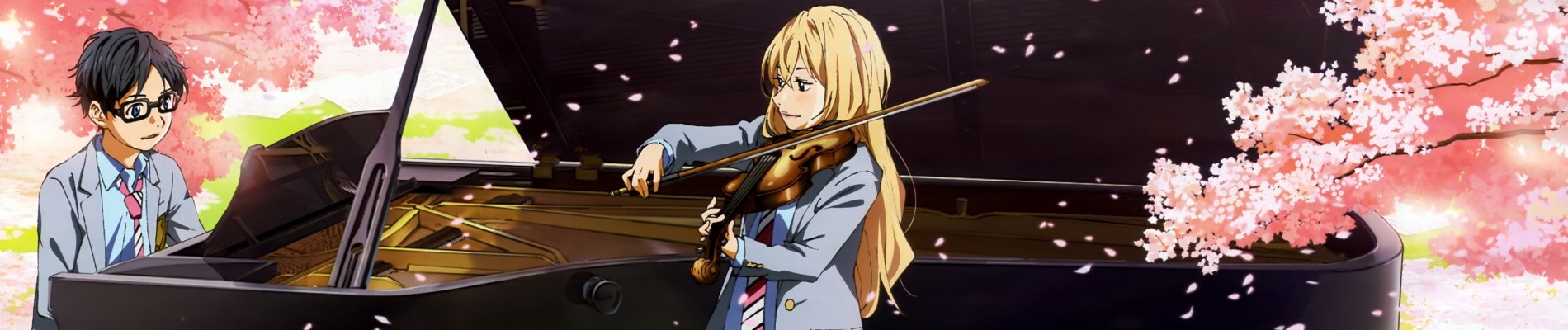
A show about classical musicians creates a unique problem for a composer: your original score has to hold its own next to Chopin, Beethoven, and Kreisler. Masaru Yokoyama, a graduate of Kunitachi College of Music, cleared that bar with a 65-track, two-hour-plus soundtrack that he later described as a career turning point.
The series blends Yokoyama's original compositions with real classical repertoire performed with unusual seriousness. Chopin's Ballade No. 1 is preserved with genuine fidelity in the finale, not simplified or reduced for a TV audience. The performance scenes are not just musical interludes. They are character psychology externalized. Trauma, freedom, grief, memory, the fear of not being able to hear or feel music anymore, all of it lives in the playing.
The strongest scenes are built around that fear. When Kousei's fingers hit the keys and the sound disappears, the silence is devastating precisely because Yokoyama's score has taught you what the music means to these characters. The original cues accumulate emotional weight across episodes. By the finale, a bare piano motif triggers a response that a full orchestra could not have achieved in episode one.
The cultural impact is real: Your Lie in April introduced a generation of anime fans to classical music. Yokoyama's other credits include Fruits Basket (2019), Horimiya, Gundam Iron-Blooded Orphans, and Mashle, but this is the one that changed his career.
Samurai Champloo: Nujabes, Fat Jon, Force of Nature, Tsutchie & MINMI
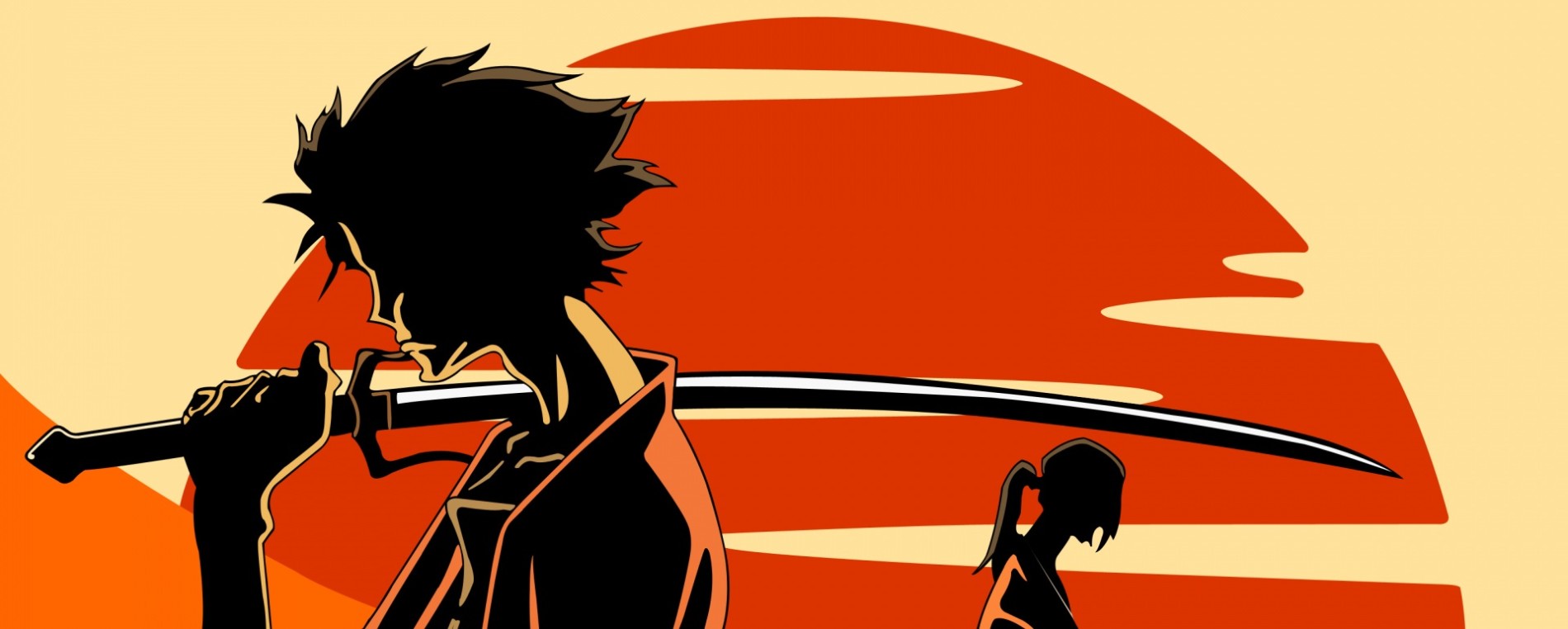
After Cowboy Bebop, some staff wanted Watanabe to bring back Yoko Kanno. He refused. He wanted a completely different identity for Samurai Champloo, and he found it in hip-hop. Not hip-hop as background flavor, but hip-hop as structural principle. The show's concept is sampling: taking an older form (jidaigeki, the samurai period piece) and remixing it. The whole thing IS hip-hop. Anachronism, cultural collage, the past made new.
Nujabes anchored the sound. "Battlecry," featuring Shing02, opens the series with something that should not work in a show set during the Edo period, and immediately makes you forget that objection. "Aruarian Dance" is soft, looping melancholy that turns quiet scenes into something transcendent. Fat Jon contributed atmospheric instrumentals, though his tendency to let tracks fade out frustrated Watanabe, who wanted abrupt endings, a creative disagreement that shows how seriously the music was treated. Fat Jon was reportedly near-tearful at the opportunity to join the project. The official albums, Departure, Masta, and Impression, document the full scope.
"Shiki no Uta," the ending theme by MINMI, is one of the most beautiful pieces of music ever attached to an anime. Full stop.
Nujabes died in 2010. His sound became permanently linked to lo-fi hip-hop aesthetics, and every "beats to study to" playlist owes a debt to Samurai Champloo whether it knows it or not.
FLCL: The Pillows

The Pillows are a Japanese alt-rock band formed in 1989, and FLCL does not have a "soundtrack" in the traditional sense. Instead of commissioning an orchestral score, the show uses existing and selected Pillows songs. This is one of those rare anime where licensed rock music does not feel like a promotional tie-in. It feels like the inner voice of the show itself.
"Ride on Shooting Star" closes every episode. "Little Busters" channels adolescent energy and rebellion. "Hybrid Rainbow" hits with bittersweet power-pop that captures the exact emotional frequency of being young and overwhelmed. The music's roughness makes the show feel adolescent, messy, impulsive, alive, which is the entire point of FLCL.
The Pillows returned for later FLCL sequels, cementing a brand-level link between band and franchise. More importantly, the original series helped introduce international anime fans to Japanese alt-rock. Before FLCL, most Western anime fans' exposure to Japanese music started and ended with J-pop openings. After it, a door was open.
Neon Genesis Evangelion: Shiro Sagisu
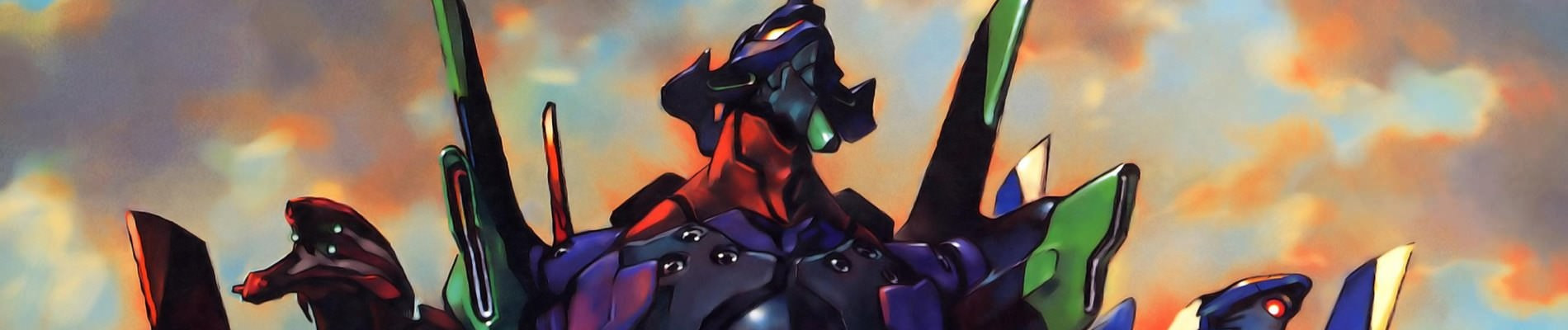
Shiro Sagisu's career began in the late 1970s, and he has been strongly associated with Hideaki Anno and Gainax (later Khara) for decades. What most viewers do not realize is that Anno is credited as "Producer, BGM Planner" on Evangelion. He played a more direct role in music planning than the typical director-composer relationship suggests.
The result is a score that blends orchestral suspense, jazz, choral writing, and psychological drama in ways that constantly subvert expectations. The music often sounds more "religious" or "military" than the story literally is, and that gap between what you hear and what you see strengthens the mythic atmosphere. Sagisu's cues create distance, irony, or dread rather than directly matching the on-screen emotions. It is unsettling in the most deliberate way.
"Decisive Battle" is an urgent, technical battle cue that makes EVA deployments feel like military operations. "Rei I" is quiet, distant, sacred. It tells you something about Rei that dialogue never could. "Thanatos" carries melancholic grief beneath the apocalypse, the sadness that the show buries under spectacle.
Sagisu won Best Music at the Tokyo Anime Award 2010 for Evangelion 2.0, but the discussion should not be limited to the original TV series. His work across multiple franchise phases, the series, the films, the Rebuilds, cemented Eva's musical identity over decades. His other credits include Nadia, His and Her Circumstances, Bleach, Magi, SSSS.Gridman, and Bleach: Thousand-Year Blood War.
Made in Abyss: Kevin Penkin
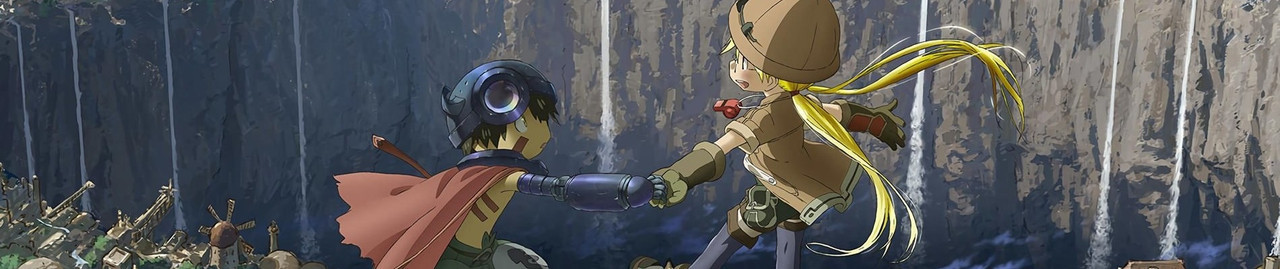
Kevin Penkin is a British-born Australian composer who studied at the Royal College of Music, and he is one of the most internationally visible non-Japanese anime composers working today. His score for Made in Abyss does something almost unfair. It makes a show about children descending into an increasingly horrifying pit sound beautiful. The score often remains gorgeous even as the story becomes nightmarish, and the contrast makes it more unsettling, not less.
Penkin told Anime News Network that the soundtrack was difficult, experimental, and time-intensive. He wrote for specific scenes, but the final placement belonged to the sound director. The result is a 52-track, two-disc set released by Kadokawa in 2017 that blends orchestral writing, ambient sound design, unusual vocals, and invented-language-like vocal performances.
"Hanezeve Caradhina" is the centerpiece, iconic, feeling simultaneously human and alien. "Underground River" is sweeping and spiritual. "Tomorrow" carries hope weighted with something heavier. The music sounds like wonder, even when the story is telling you that wonder has a cost.
Penkin won Best Score at the 2018 Crunchyroll Anime Awards for Made in Abyss and won again at the 2021 Awards for Tower of God. His other credits include Shield Hero, Star Wars: Visions, The Apothecary Diaries, and the Spice and Wolf remake.
Jujutsu Kaisen: Hiroaki Tsutsumi, Yoshimasa Terui & Alisa Okehazama
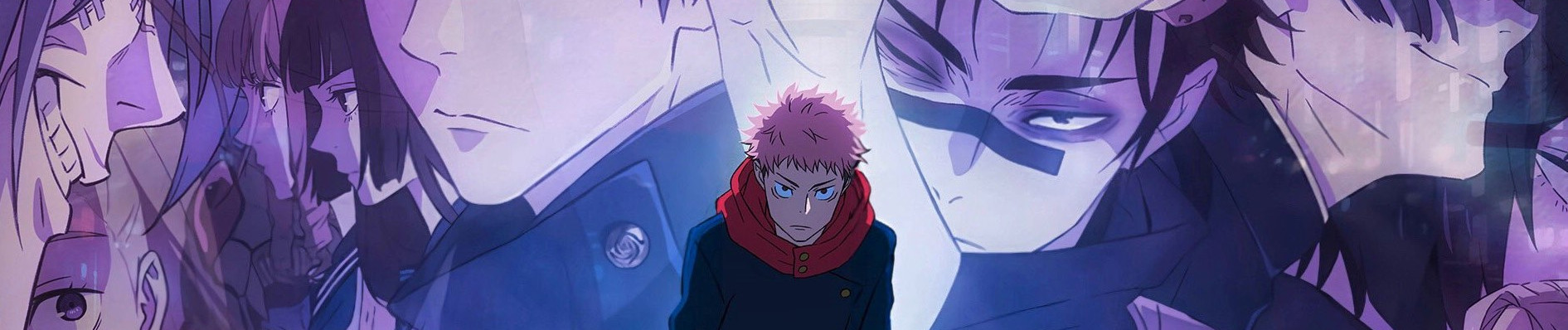
Three composers, and the reason for that number explains why the soundtrack sounds the way it does. Music producer Yoshiki Kobayashi broke it down: Tsutsumi brings a rock-band background plus soundtrack experience. Terui works in rock, minimal, and jazz. Okehazama handles synths and melodies. The three-composer structure is why rock, jazz, synth, melody, and cinematic action can coexist in the same show without collision.
The composers have openly discussed their influences: hip-hop, rock, jazz, Flying Lotus, Billie Eilish. You can hear it. The first season soundtrack spans 60 tracks (TOHO Animation Records, 2021) and sounds urban, modern, club-adjacent. This is not traditional supernatural battle anime music. It sounds like something you would hear in a Tokyo venue at 2 AM, and that contemporary edge is what makes the cursed-spirit fights feel grounded in the present.
"Your Battle is My Battle" drives rhythmic action sequences. Gojo's associated tracks are atmospheric and dripping with stylish power. "Remember" provides emotional balance when the show needs to breathe. The range is the point. No single composer could cover this ground alone.
Worth noting: JJK won Anime of the Year at the 2021 Crunchyroll Anime Awards, but Best Score that year went to Kevin Penkin for Tower of God. The soundtrack's strength was always more about vibe than prestige.
Violet Evergarden: Evan Call

Evan Call is an American composer who studied film scoring at Berklee College of Music, moved to Japan, worked with Elements Garden, and later joined Miracle Bus. His score for Violet Evergarden is an exercise in restraint, and restraint, when you are scoring a show animated by KyoAni, is the only correct approach. The visuals already carry enormous emotional weight. The music's job is to support without overpowering.
Call wrote his first BGM from the novel and presentation stage, before the anime was fully in production. Director Taichi Ishihara liked it and kept it, an early vote of confidence that shaped the entire soundtrack's direction. The Automemories soundtrack spans 47 tracks (Lantis, 2018), later expanded with Echo Through Eternity. A 2025 deluxe vinyl edition, three LPs with interviews and liner notes, proves the long-term audience affection for this music.
"Theme of Violet Evergarden" is elegant and restrained, exactly like its subject before she learns to feel. "The Voice in My Heart" traces Violet's emotional development. "Across the Violet Sky" sweeps with distance and longing. The score is the emotional anchor of a show about grief, memory, war trauma, letters, and recovery. It works by doing less, not more.
Call later won Tokyo Anime Award recognition (Sound/Performance) for Frieren, and his other credits include Josee the Tiger and the Fish, My Happy Marriage, Frieren, and Muv-Luv Alternative.
Why these soundtracks last
Strip the music from any of these shows and something irreplaceable disappears. Not just atmosphere. Identity. The greatest anime soundtracks are not collections of good songs. They change how the anime is remembered. You can hear "Tank!" without seeing Spike, "Sadness and Sorrow" without seeing Naruto on that swing, "Hanezeve Caradhina" without looking into the Abyss, and the emotional world comes back instantly. The composers on this list were not making background music. They were building the thing that stays with you after the screen goes dark.
That is what separates a good anime from a legendary one.
Listen on AnimePulse
Want to revisit these soundtracks? AnimePulse has a built-in music player on every anime page. Head to any series, like Cowboy Bebop, Attack on Titan, or Made in Abyss, and you will find openings, endings, and insert songs ready to play. Build a queue, discover tracks you missed, and hear what made these shows legendary.